
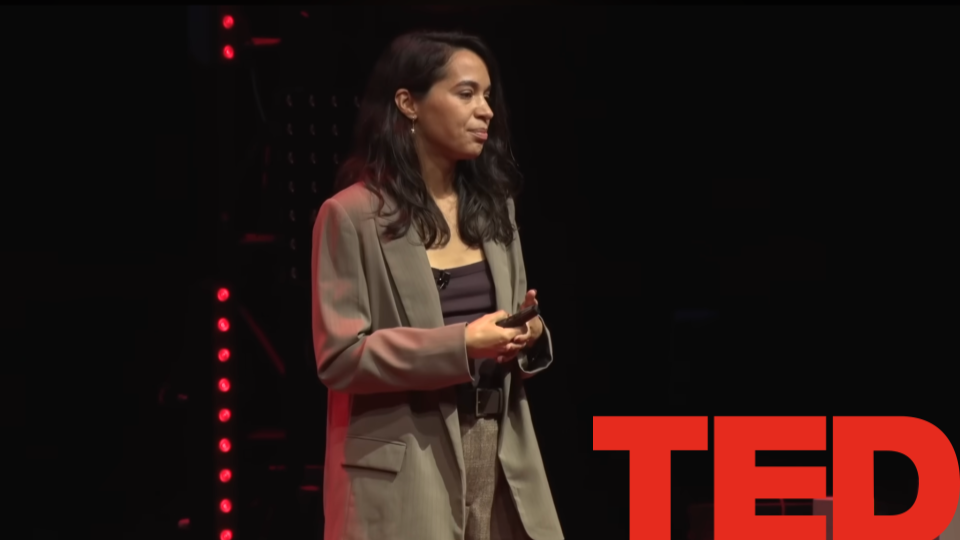
Imagine that you’re sitting in a doctor’s office receiving frightening news, and your first instinct isn’t to process the gravity of the situation… It’s to check your calendar. As I explain in my TEDx talk, this is exactly what happened to me a few years ago.
Faced with uncertainty, I reached for the one thing that had always made me feel safe: the identity of being the one who never falls behind.
In moments of disruption – illness, career shifts, loss, transitions – our instinct is rarely to pause. Instead, we tighten. We make more plans, add more systems, double down on routines, or cling to an identity that once made us feel safe. The irony is that the more uncertain things feel, the more certain we try to appear – both to ourselves and to others.
Psychologists call this compensatory control: the tendency to create artificial order when real control is threatened. Research shows that when people feel powerless or uncertain, they are more likely to seek structure, rules, clear hierarchies, or rigid explanations of the world.
These substitutes can calm the nervous system in the short term, but they don’t restore actual agency. They only create the feeling of control.
Here’s what you can do instead to break free from compensatory control:
1. Name the story. Instead of saying “I need to be more organized,” notice when you’re reaching for structure to soothe anxiety. This will help you loosen your grip on who you think you need to be when life feels unstable.
2. Shift from big goals to tiny experiments. Compensatory control is future-obsessed. Experiments are present-focused. Try something small for a fixed time using this simple protocol: “I will [action] for [duration]. This will help you restore agency without requiring certainty.
3. Lower the stakes on purpose. When the core issue feels too charged, experiment in a different domain. This kind of lateral experimentation will bypass resistance more effectively than forcing yourself to tackle the issue head on.
Compensatory control is a protective reflex. It exists because the brain is trying to keep you safe when the world stops making sense. But over time, it narrows not only what you do, but who you believe you are allowed to be.
Letting go of compensatory control isn’t about eliminating uncertainty; it’s about increasing your tolerance for it. This is why experimentation is so powerful: it gives you momentum without requiring a map. It loosens the grip of identity and reopens a sense of possibility.
And in that space between knowing and not knowing, you can discover versions of yourself that control would never have allowed you to meet.
Experimentation helps loosen the grip of identity and reopen a sense of possibility. And in that space between knowing and not knowing, you can discover new versions of yourself that control would never have allowed you to meet.