
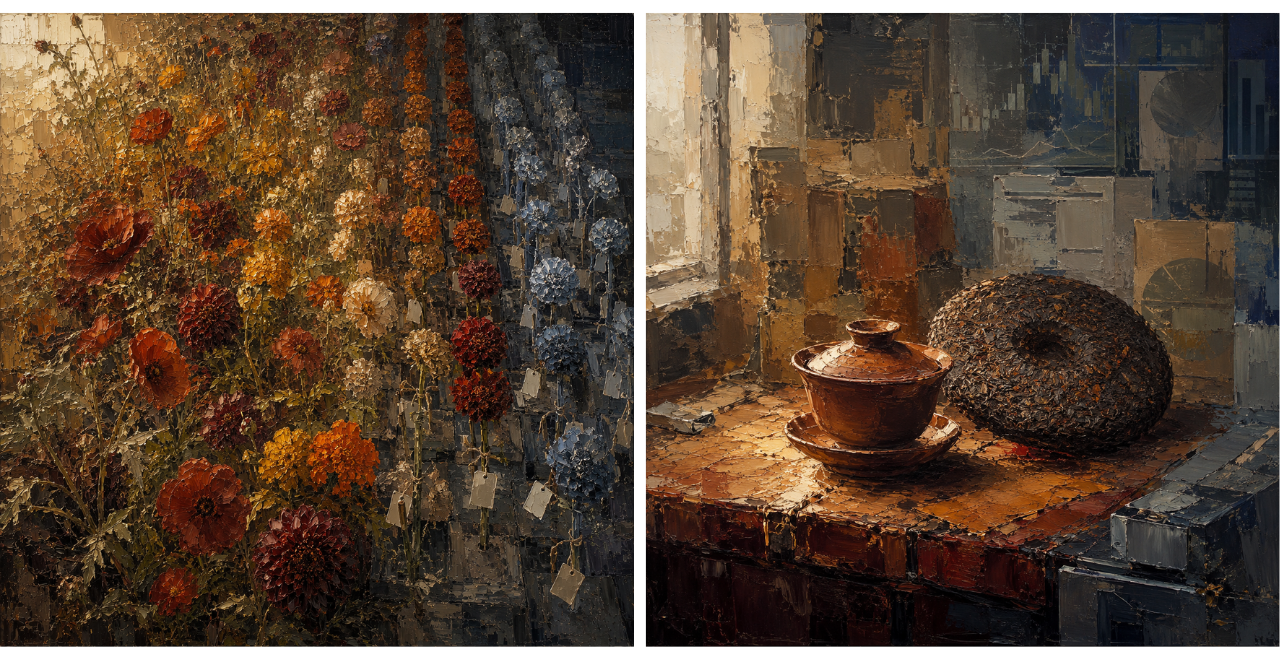
A couple of years ago, I tried pu’er tea at a friend’s place. It’s a fermented tea produced in China that can sell for thousands of dollars. I loved it.
Over the next few evenings, I read about its history, the aging process, the difference between sheng (naturally aged over decades) and shou (artificially processed to speed up maturation). I watched importers unbox vintage cakes on YouTube.
Then my curiosity led me to another rabbit hole. Why is it so hard to buy pu’er tea in Europe? Maybe I could import it. Maybe I could start a small online shop. Before I knew it, I was looking at wholesale pricing and shipping logistics from Yunnan, and I hadn’t even finished my first cake of tea.
I know from reading the discussions in the Ness Labs community that this experience is very common. You start learning something new because it feels fun – photography, baking, pottery, gardening. Then you start asking yourself, should you build an audience around it? Could this be monetized?
Before you know it, a hobby that started as pure curiosity becomes a hustle.
Part of the reason is cultural. We live in a world where productivity is rewarded so heavily that hobbies can feel like a waste of time and energy unless they produce something measurable in return.
But hobbies play an important psychological role precisely because they exist outside those expectations. They help create what psychologist Patricia Linville calls “self-complexity”: having multiple dimensions to your identity rather than building your entire sense of self around a single role.
When work becomes your primary source of identity, professional setbacks threaten a large part of how you see yourself. But personal interests give you other places to stand. They make you less fragile when another area of life gets difficult.
The problem is that monetizing a hobby changes your relationship with it. Once customers, deadlines, metrics, or expectations enter the picture, the activity starts carrying pressure. Your level of enjoyment becomes tied to performance.
I noticed this with pu’er tea: the moment I started thinking about logistics and marketing, I had less mental space to enjoy the tea itself.
So how do you avoid turning every hobby into a hustle?
• Keep one hobby completely offline. Resist the urge to immediately post about it. No Instagram stories, no “content” about it, just you and your hobby. Protecting something from external validation helps preserve the sense of play that made you enjoy it in the first place.
• Embrace nonproductive hobbies. Pay attention to the moment your thinking switches from “this is interesting” to “how can I make this productive?” That shift is often where extrinsic pressure starts to replace intrinsic curiosity. Just noticing it is usually enough to loosen its grip.
• Build more identity outside of work. To develop self-complexity, spend time developing parts of yourself that have nothing to do with your career. The more dimensions your identity has, the less any single setback can destabilize you, and the less likely you are to turn hobbies into hustles.
• Let yourself stay amateur. Hobbies occupy a rare space where exploration matters more than outcomes, and that’s part of what makes them restorative. Do things badly and just have fun without needing visible progress. Remember that not every project needs a learning curve with milestones.
There’s a simple test for whether something is still a hobby: would you do it on a day when nothing comes of it? No audience, no progress, no output. If the answer is yes, protect that.
You don’t need to stop being ambitious, but we all need at least one corner of our life where ambition isn’t the main drive.
Tiny Experiment of the Week
Ready to put these ideas into practice? Try this week’s tiny experiment to reconnect with curiosity without turning it into productivity.
I will [try a new hobby privately] for [one week].
No posting, tracking, or trying to turn it into something useful. This experiment helps create distance between curiosity and performance, so you can enjoy a hobby for its own sake. Want to dig deeper? Get your copy of Tiny Experiments.