

One of the easiest ways to slowly lose control of your time is to become someone who is always available. I think of this as a “reflexive yes”: the habit of agreeing before you have had a chance to ask what the request will actually cost you.
It can look like agreeing to another meeting when your week is already full, replying immediately to a message that could have waited, or saying yes to a favor before checking whether you actually have the capacity.
At first, it feels like a good thing. People see you as reliable and easy to work with. But over time, constant availability can turn into exhaustion, resentment, and the feeling that your own priorities only exist in the leftover spaces of your life.
A lot of us move through life this way more often than we realize. Someone asks for help or needs “just a quick favor,” and before you fully think it through, you hear yourself saying yes.
The tricky part is that this behavior usually comes from positive intentions. You genuinely care about doing good work and don’t want to disappoint anyone.
Still, saying yes too often can pull you away from the things that actually matter to you.
There are three main reasons why we fall prey to the reflective yes:
- Seeking approval. Many of us learn early that being helpful makes us feel valuable, so saying no can feel like letting people down.
- Unclear priorities. When you are not sure what matters most, every request can feel equally important.
- Fear of missing out. Saying no can make you worry you are missing an opportunity, a potential connection, or a moment that might positively impact your future.
And the cost of constant yeses adds up and leaves you with less energy for your own ambitions. Eventually, research suggests this can lead to burnout.
On the other hand, healthier boundaries are linked to greater mental energy and a stronger sense of personal agency.
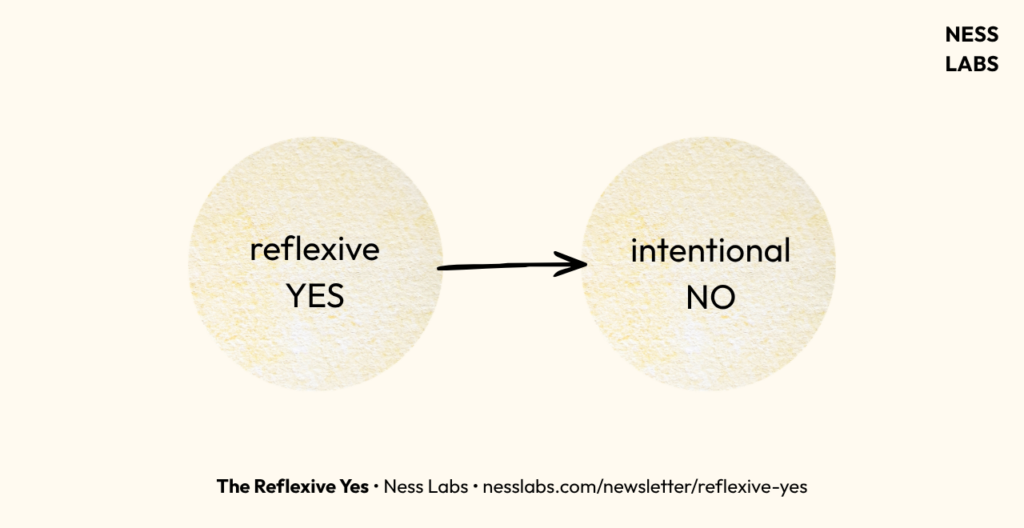
So here’s how you can break free from the reflective yes:
• Define your current priorities. Before setting boundaries with other people, get clear on what actually matters to you right now. This will make it much easier to recognize which requests genuinely align with them and which ones just consume your energy.
• Pause before responding. Create a small gap between the request and your answer instead of responding automatically. Even a simple “let me check and get back to you” gives you space to decide what to take on with intention.
• Practice saying no briefly. You don’t need a long explanation or a perfectly crafted excuse in order to protect your time. Short, honest responses are often enough, and the discomfort tends to shrink the more you practice.
• Stop managing other people’s reactions. Boundaries are not about managing how others feel, and someone feeling disappointed doesn’t mean you made the wrong decision.
Learning to set boundaries is uncomfortable partly because it forces you to activate the kinds of emotions you may have spent years trying to avoid, including guilt or fear of letting people down.
But healthy boundaries are necessary if you want to make sure there’s still enough energy left for the life you actually want to build.
Tiny Experiment of the Week
Ready to put these ideas into practice? Try this week’s tiny experiment:
I will [pause before saying yes] for [5 days].
Even a 10-second pause can interrupt the instinct to say yes automatically and create space for a more intentional choice. This experiment will help you notice how often your first response comes from pressure or guilt rather than genuine willingness.
➤ Want to dig deeper? Get your copy of Tiny Experiments.