
Welcome to this edition of our Tools for Thought series, where we interview founders on a mission to help us think better and work smarter. Dr George Sachs is the co-founder of Inflow, a science-based app created by ADHD clinicians and psychologists. In this interview, we talk about the importance of self-reflection, strategies for time management and task initiation, the power of combining psychoeducation and practical tools with in-the-moment support, and much more. Enjoy the read!
On your site, you describe Inflow as a program built specifically around ADHD and executive function challenges. How did that specific audience shape your approach to design and development?
A lot of my work, as a psychologist and through Inflow, is about helping people shift the way they relate to their brains. Many people come to ADHD support believing they are disorganized or lazy, when in reality they are dealing with a brain and nervous system that processes attention, time and motivation differently.
Understanding your neurodivergent brain is not about labeling yourself or lowering expectations. It is about gaining clarity. For many people, that process starts with simply reflecting on their own patterns. When you understand why certain things are hard, you can stop wasting energy fighting yourself and start designing your life in a way that actually works for you. From personal experience, I know that this kind of understanding can become the foundation for healthier productivity and emotional wellbeing.
The idea for Inflow grew out of my clinical work with people with ADHD. I realized that in therapy, I could teach skills and offer psychoeducation, but that kind of support is expensive, time consuming and simply not available to most people who need it.
I wanted to build something that could help any adult struggling with ADHD-related challenges. A tool that was evidence-based, but also honest about how ADHD shows up in real life.
Before we ever built the app, my co-founders and I spent a lot of time speaking directly with people living with ADHD. We ran interviews, talked to early users, and built an initial waitlist that grew to over 10,000 people. Those conversations shaped what we built and how we built it.
Our founding team and early contributors included perspectives from clinicians alongside people with lived experience of ADHD, so everything was shaped by clinical evidence and real-world use from the start.
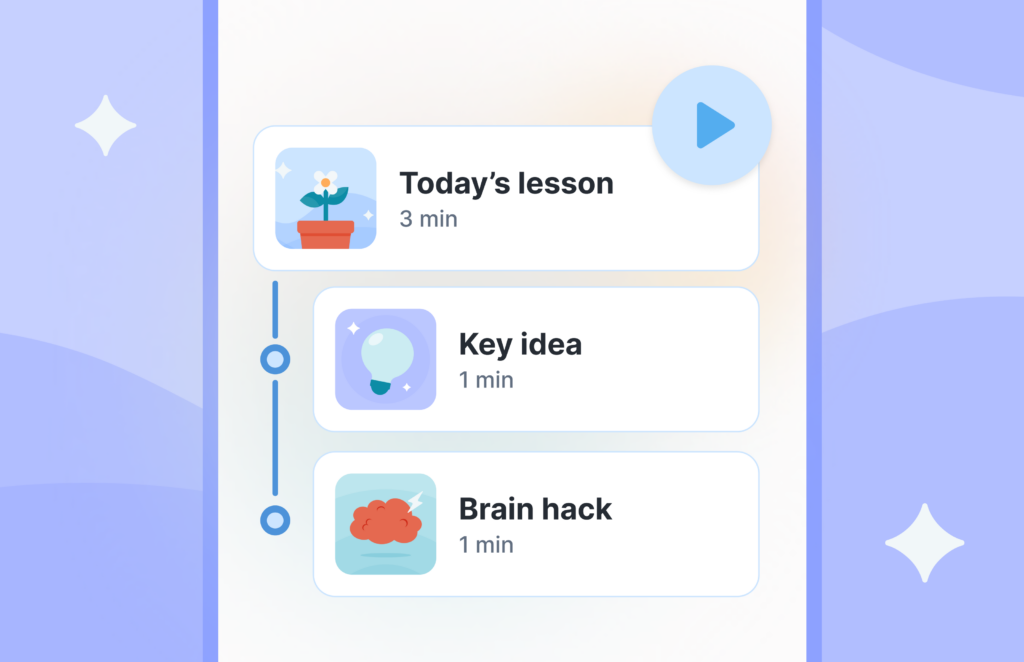
We knew long lessons, dense language or rigid programs would not work. Instead, we focused on short, focused lessons that translate directly into everyday life. We use language that feels accessible and nonjudgmental.
We are intentional about grounding the product in research, not just theory. Inflow has been evaluated through a usability and feasibility study and more recently in a randomized controlled study exploring how people engage with the app and how it may support everyday functioning. Participants reported improvements in areas like quality of life, organization, time management, and planning skills, particularly among those who engaged more deeply with the app.
Let’s talk about how Inflow works. The app combines educational content, in-app exercises, and coaching-style tools. Why did you choose that format instead of, say, a traditional course or a simple planning app?
Before we even thought about app features, we spent a lot of time listening. Listening to the community, listening to potential users, and reflecting on our own lived experience of ADHD. What became clear very quickly was that most people were not failing because they lacked information. They were struggling because support was fragmented or built around assumptions that did not match their reality.
That insight shaped a lot of what came after. We were not trying to build the most comprehensive course or the most powerful productivity system. Our goal was to help people understand themselves better, reduce shame and build self-acceptance alongside practical support for ADHD.
For many people with ADHD, habit-building on its own can feel like another place to fall short if they do not understand why certain things are hard in the first place.
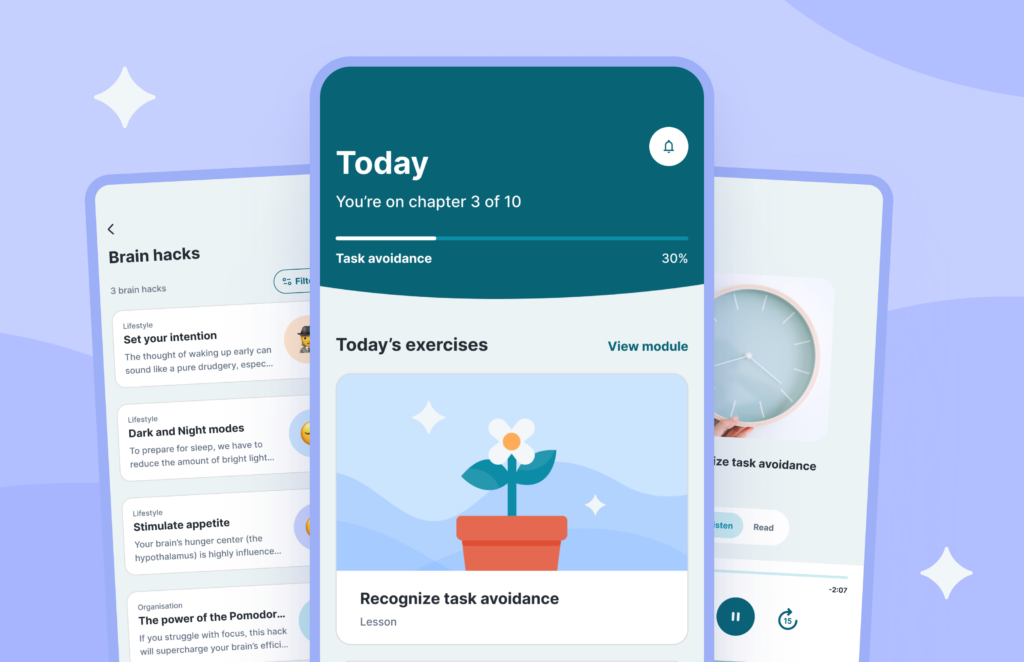
That is why Inflow is designed as specialist ADHD support rather than a traditional course or planning app. The app combines short, evidence-based psychoeducational modules that help people make sense of how ADHD affects things like time perception, task initiation and emotional regulation, alongside in-app exercises and interactive elements that let them practice skills in real life.
We think of Inflow as an evidence-based ADHD self-help app designed to complement clinical care when someone has access to it, and to offer structured, evidence-based self-help support when they do not.
ADHD is not consistent from day to day, so support cannot be either. People need something that is flexible and easily accessible that helps them respond to what is actually happening today.
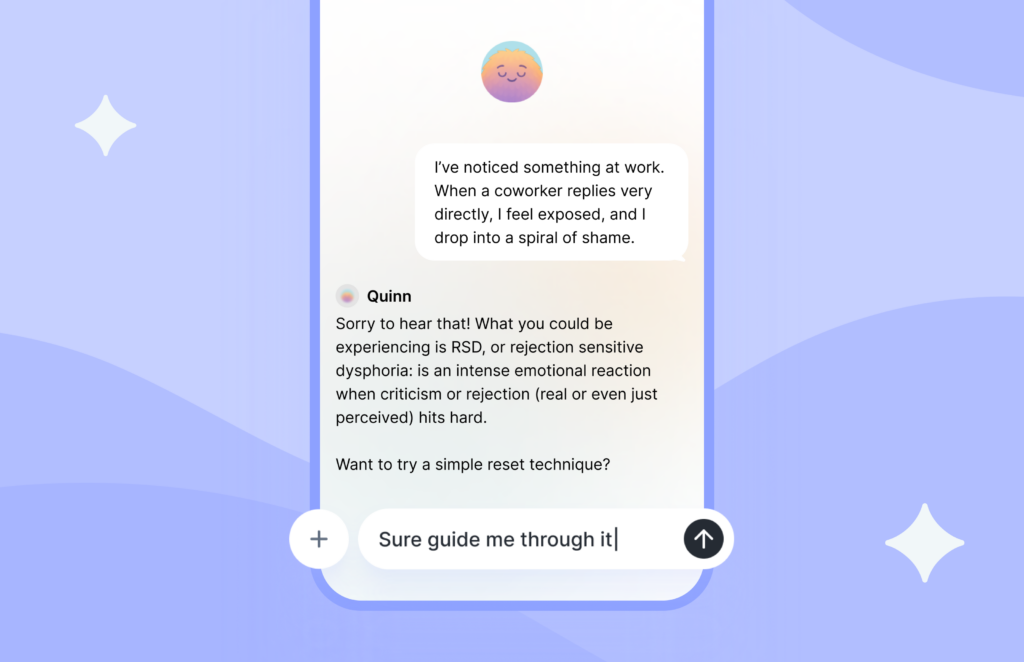
Alongside this, Quinn, our AI-driven support, helps bridge the gap between learning and action. It allows people to ask questions about the content, think through priorities when they feel stuck, and reflect on emotional patterns in the moment. Rather than offering generic advice, Quinn is designed to support reflection and decision-making. We see it as a responsible use of AI that augments human understanding rather than replacing it and one that can be a gamechanger for individuals with ADHD-related challenges.
Again and again, users told us they did not want another system to keep up with or something they would procrastinate on and eventually abandon. They wanted support that felt flexible, forgiving and responsive to real life.
By combining psychoeducation, practical tools, and in-the-moment support, we were able to design Inflow to work with ADHD rather than against it. At its core, the app is about helping people move from understanding to action in a way that feels sustainable and compassionate.
For us, that balance between clinical grounding and real-world usability continues to guide how we evolve the product. Inflow has been evaluated through a usability and feasibility study and more recently through a randomized controlled trial that showed meaningful improvements. For us, that balance between evidence and real-world usability is critical.
In the app and on your blog, you talk about approaches like breaking tasks into very small steps, using visual timers, and body doubling for focus. Why did you decide to emphasize these particular strategies?
We emphasise those strategies because they map very closely to how ADHD brains process time, attention and task initiation. Challenges like time blindness, task paralysis and distractibility are core features of ADHD. They are not about effort or intention, but about how the brain regulates focus and translates intention into action.
Strategies like breaking tasks into very small steps, using visual timers and body doubling work because they provide external structure for processes that are less reliable internally for people with ADHD.
A visual timer helps make time tangible for an ADHD brain that struggles to sense it passing. Breaking tasks down lowers the activation energy required to start when initiation feels stuck. Body doubling supports sustained attention by adding a gentle external anchor rather than relying on internal motivation alone (something ADHDers really struggle with).
We chose to build product features and lessons around these approaches because they consistently help in both clinical practice and lived experience. Standard to-do lists assume that remembering, prioritizing, and starting tasks are the main challenges. For many people with ADHD, the difficulty is actually initiating, staying engaged and re-engaging when attention drops.
By designing around how ADHD brains work rather than how they are expected to work, the Inflow app offers sustainable support for everyday life for adults with ADHD.
Who is using Inflow today, and what are some of the main ways they’re using it?
We see a very broad range of people using Inflow today. Some are newly exploring ADHD and trying to understand patterns they have struggled with for years. Others were diagnosed a long time ago but still feel overwhelmed by day-to-day life, and are looking for support that feels practical and sustainable.
People use the app in different ways depending on where they are and what they need in the moment. For many, what brings them to Inflow is a period of overwhelm, when things start to feel unmanageable and they’re looking for a way to slow down and find their footing again.
Some focus on routine-building, time awareness and task initiation. Others use it more for emotional regulation, understanding overwhelm, rejection sensitivity or burnout. This can support their own wellbeing and contribute to healthier relationships over time. For many, simply having language for experiences they have never been able to explain before is a meaningful starting point.
Quinn, our AI-driven support, also plays a key role here. It helps personalize and contextualize the experience day to day by allowing users to ask questions about the content, reflect on what is going on emotionally, and think through how a strategy applies to their specific situation. It helps bridge the gap between learning something and actually putting it into practice.
For many users, one of the most meaningful outcomes is simply feeling less alone. The community board and the daily rotating question give people a low-pressure way to reflect and see that others are dealing with similar challenges.
We also see a lot of people getting real value from body doubling sessions. For some users, that shared structure and presence makes a noticeable difference for focus and follow-through, especially when working alone feels isolating or overwhelming.
Most people do not use just one feature in isolation. That flexibility is intentional, because ADHD needs can change from moment to moment.
What about you, how do you personally use Inflow, if at all?
I use Inflow in much the same way many of our users do. Not as something I engage with perfectly or consistently, but as a support I return to when I need it.
I often use the psychoeducational content as a reminder rather than as new information. When I notice myself getting frustrated or stuck, revisiting a short lesson can help me reframe what is happening and respond with more compassion.
I also use Quinn to think through priorities when my head feels cluttered or when I am emotionally charged and need help slowing things down.
What has probably surprised me the most is how much Inflow has reinforced something I already knew as a psychologist but sometimes forget in daily life. Support does not have to be all or nothing to be effective. Even brief moments of reflection or structure can make a meaningful difference.
Using Inflow has deepened my belief that ADHD support works best when it is integrated into real life rather than treated as something separate you have to keep up with.
Looking ahead, how do you see Inflow evolving over the next few years?
Looking ahead, our focus is on deepening personalization and making support more responsive to where someone is in the moment. ADHD is not static and support for it shouldn’t be either. We want Inflow to adapt to users’ patterns, needs and goals over time, rather than offering a one-size-fits-all experience.
A big part of that work is recognizing that ADHD-related challenges often show up alongside other experiences. Many people are navigating anxiety, low mood, burnout, sleep issues or difficulties with emotional regulation and those factors can meaningfully shape how executive function challenges show up day to day.
Inflow is designed to be inclusive and accessible, and people do not need a formal ADHD diagnosis to benefit from the support.
We are continuing to expand our content and tools to better reflect this broader picture, so support feels relevant to the person rather than tied to a single label. Many users are also reflecting more broadly on their neurodivergence and wondering whether some of the traits they recognize might relate to autism, or other overlapping experiences. Rather than focusing on diagnosis, our approach is to help people understand patterns in their lived experiences in a grounded and responsible way.
That perspective also shapes how we think about personalization. We are expanding the role of Quinn as a guide that helps people connect insights across the app, reflect on what is working, and adjust strategies over time without feeling like they are starting from scratch.
Personalization, for us, means meeting people where they are and responding to their capacity, context and emotional state, not pushing them toward a fixed idea of productivity or functioning. More broadly, we want to continue expanding beyond narrow ideas of productivity. Executive function challenges affect every area of daily life. From work and creativity to relationships, rest, self-esteem and mental health. Our long-term vision is for Inflow to support people across those domains in a way that remains grounded in clinical evidence and consistently human and usable. Over time, we see Inflow playing a role in a more connected care ecosystem, helping people bridge between everyday self-support and clinical or telehealth care in a way that feels clearer and more integrated.
Thank you so much for your time, George! Where can people learn more about Inflow?
Thanks for featuring Inflow. For readers who want to reflect more deeply on how ADHD might show up in their daily lives, Inflow’s free ADHD traits quiz is a good place to start.