
Spaced repetition is one of the few evidence-based learning techniques you can actually trust will help you remember things better. In this short tutorial, we are going to use Roam Research to build a simple spaced repetition system from your notes.
1. Create your box
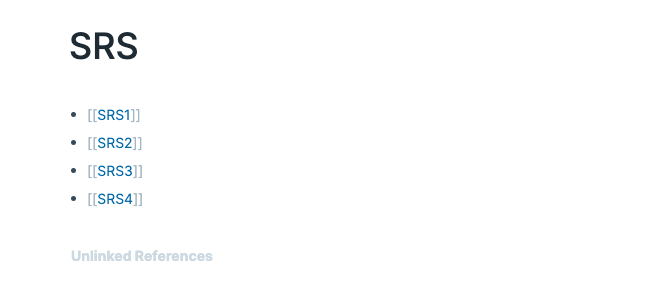
You need a box with five sections to put your flashcards in. Create a new page, then type:
- [[SRS1]]
- [[SRS2]]
- [[SRS3]]
- [[SRS4]]
- [[SRS5]]
Each bullet point is a box. SRS stands for Spaced Repetition System.
2. Create your flash cards
In a traditional flash cards system, creating your card is a manual, dedicated process you do in addition to studying and learning. With this system, you create your flashcards as you study and learn. Whenever you are taking notes, add [[SSR1]] to any block you want to remember.
It should look like this:
- Prompt [[SSR1]]
- Answer, which can be…
- …several bullet points long.

3. Review your flashcards
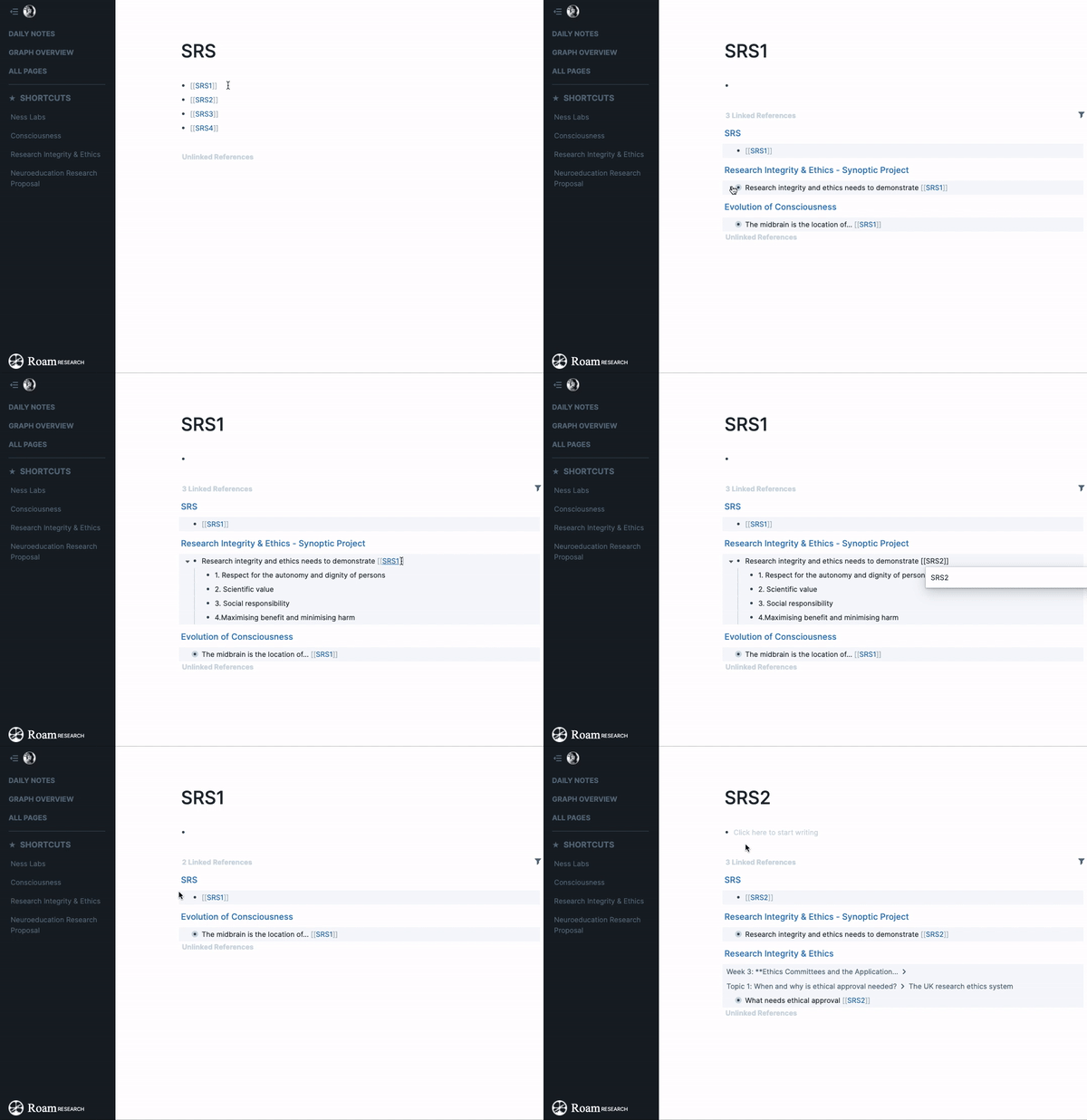
The first time you do a review session, open [[SSR1]] and go through each item in the unlinked section.Try to guess the answer in your head, then click on the arrow left to the block to see the correct answer. If you got it right, replace [[SSR1]] with [[SSR2]] to move it to the next box.
In subsequent sessions, you will keep on doing the same. If you get something right, it moves to the next box. If you get it wrong, it goes back to [[SSR1]].
4. Schedule your next reviews
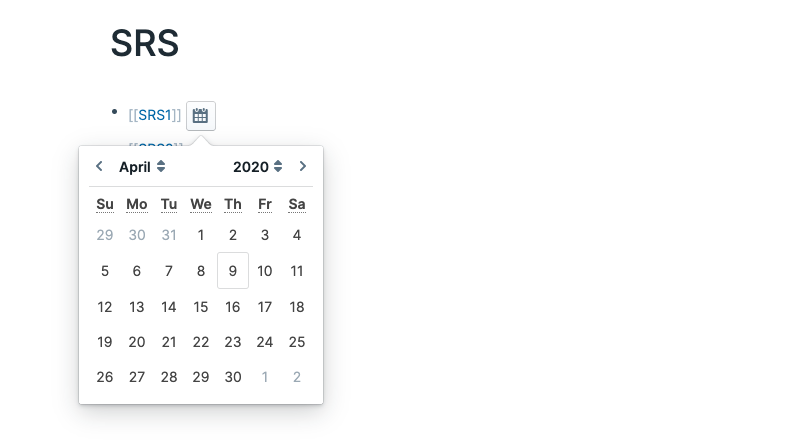
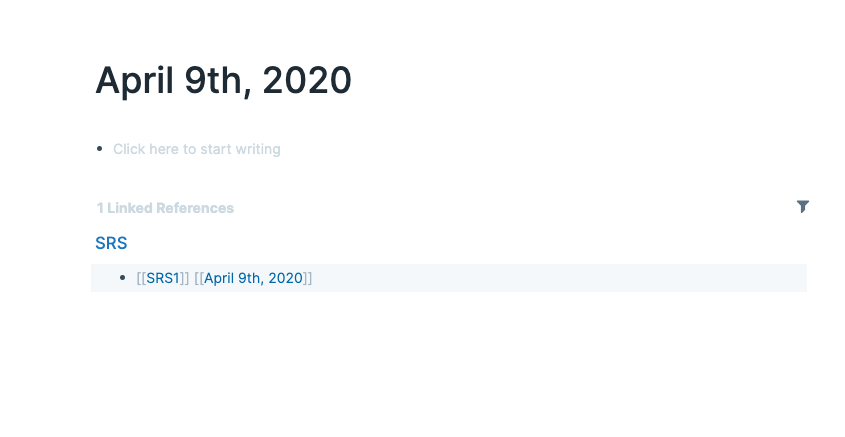
The idea of spaced repetition is the higher the box number, the longer the interval before you test your memory on the items it contains. Every time you are done, you just need to add the date of the next review session next to each box.
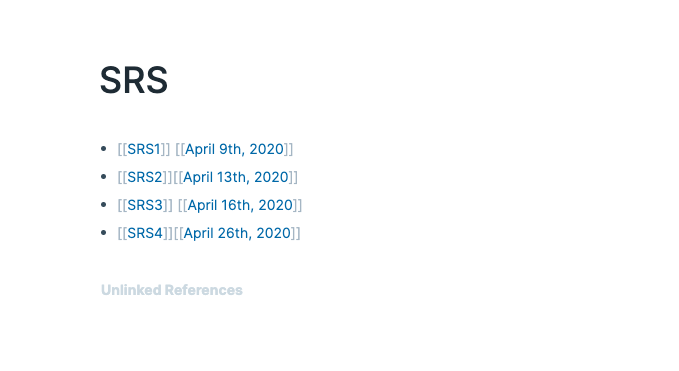
Your sessions will then appear directly at the bottom of your daily notes so you are reminded to do them.
5. Rinse and repeat!
Once you’re done with each review session, edit the date and it will appear in the right daily journal page. Some people like to mark them as to-do items so they stay linked even after you’re done, but I find that it makes my graph unnecessarily complicated, and I don’t really care to keep track of past sessions, only of future ones. Just know that it is a possibility if that’s something you’d like to be able to look at in the future.